
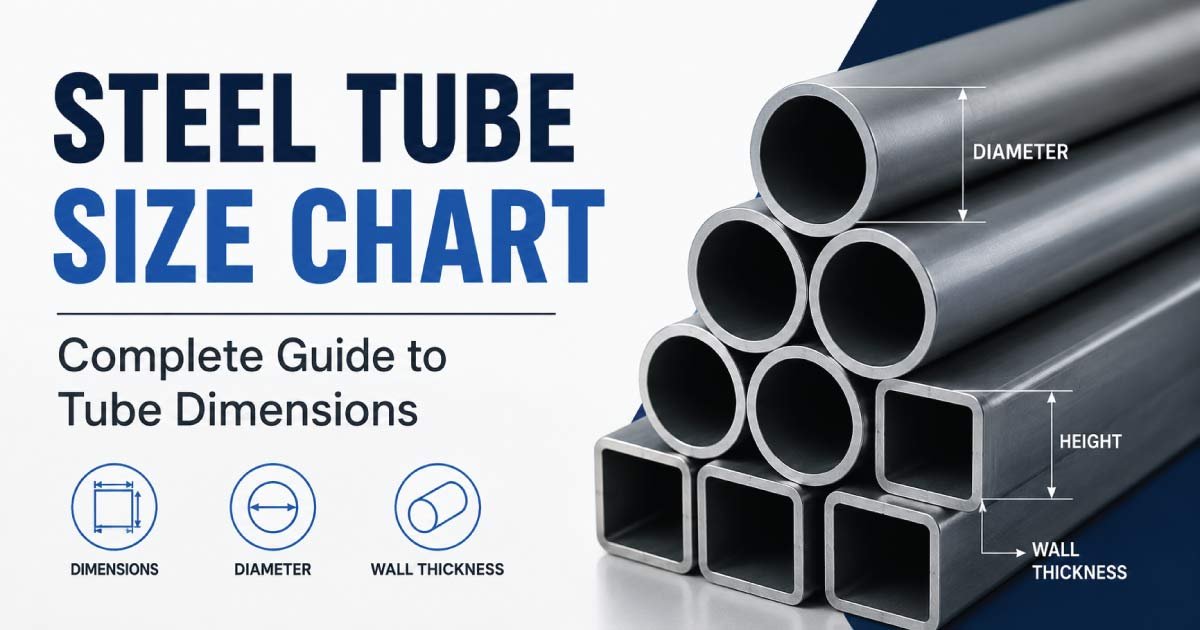
Steel tubes are essential components in construction, manufacturing, automotive engineering, mechanical systems, and countless industrial applications. Whether you are building a structural framework, fabricating machinery, or designing a piping system, understanding steel tube sizes is critical for selecting the right material.
Steel tubes are available in a wide range of dimensions, wall thicknesses, and shapes. Because different industries use different sizing standards, choosing the correct steel tube can sometimes be confusing. This guide explains steel tube dimensions, sizing methods, common standards, and provides a practical steel tube size chart to help you make informed decisions.
What Is a Steel Tube?
A steel tube is a hollow structural product made in round, square, or rectangular shapes and widely used in engineering, construction, and mechanical systems. Its hollow design reduces overall weight while still maintaining high strength, making it more efficient than solid steel bars in many applications.
Steel tubes are produced using different steel materials depending on strength and corrosion resistance requirements. These variations allow them to perform well in both light-duty and heavy industrial environments.
Steel tubes are commonly made from:
- Carbon steel
- Stainless steel
- Alloy steel
- Galvanized steel
They are used in:
- Construction projects
- Structural frameworks
- Automotive manufacturing
- Industrial machinery
- Agricultural equipment
- Furniture production
- Oil and gas systems
Their strong structure, long lifespan, and adaptability make steel tubes essential in modern engineering and industrial development.
Why Steel Tube Size Matters
Steel tube size plays a major role in determining safety, efficiency, and cost-effectiveness in any project. If the size is too small, it may not handle the required load, while an oversized tube can increase material cost and unnecessary weight.
Correct sizing ensures that the tube performs reliably under pressure, stress, and environmental conditions without failure. It also helps engineers maintain balance between strength and cost.
Proper tube sizing helps:
- Ensure structural integrity
- Meet load-bearing requirements
- Improve system performance
- Reduce material costs
- Simplify fabrication
- Increase durability
Accurate size selection is essential for engineers and fabricators to achieve safe, durable, and cost-efficient results in construction and manufacturing projects.
Understanding Steel Tube Dimensions
Steel tube dimensions define the physical size and performance capability of the tube. These measurements are essential for selecting the right tube for structural strength, flow efficiency, and installation compatibility.
The three main dimensions used in steel tubing are outside diameter, wall thickness, and inside diameter. Each measurement serves a different functional purpose.
Outside Diameter (OD)
The outside diameter is the total width of a tube measured from one outer edge to the opposite outer edge. It is one of the most important sizing factors because it determines how the tube fits into systems, connectors, or structural frameworks.
For example, a tube with a 2-inch outside diameter measures exactly 2 inches across its external surface, regardless of wall thickness.
Wall Thickness
Wall thickness refers to the actual thickness of the steel material forming the tube’s structure. It directly affects strength, durability, and load-carrying capacity, making it a critical factor in heavy-duty applications.
Common wall thickness measurements include:
- 0.065 inch
- 0.083 inch
- 0.120 inch
- 0.188 inch
- 0.250 inch
Thicker walls provide higher resistance to pressure, bending, and impact, making them suitable for industrial and structural applications requiring extra strength.
Inside Diameter (ID)
The inside diameter is the hollow space within the tube that allows the passage of fluids, gases, or cables. It is important in applications where flow capacity or internal clearance is required.
It is calculated using:
Inside Diameter = Outside Diameter − (2 × Wall Thickness)
A larger inside diameter improves flow efficiency, while a smaller one reduces internal space but may increase strength.
Steel Tube vs Steel Pipe
Steel tubes and steel pipes are often confused, but they differ in measurement standards, usage, and precision. Understanding the difference helps in selecting the right material for specific engineering and industrial applications.
1. Steel Tube
Steel tubes are measured using exact physical dimensions, making them suitable for precision applications where accuracy and strength are important.
Steel tubes are measured by:
- Outside diameter
- Wall thickness
They are commonly used for structural and mechanical applications.
2. Steel Pipe
Steel pipes are designed mainly for transporting fluids and gases, and their sizing system is based on nominal values rather than exact physical measurements.
Steel pipes are measured by:
- Nominal Pipe Size (NPS)
- Schedule number
They are primarily used for fluid transport.
Tubes generally have tighter dimensional tolerances than pipes, making them more suitable for structural and precision engineering applications.
Common Steel Tube Shapes
Steel tubing is manufactured in different shapes to meet specific structural, mechanical, and design requirements. Each shape is engineered to handle different types of stress and load distribution, making it suitable for a wide range of industries including construction, automotive, and fabrication work.
The choice of shape depends on how the tube will be used, whether for strength, aesthetics, or space efficiency.
Steel tubing is available in several shapes.
Round Steel Tube
Round steel tubes are the most widely used type because of their balanced strength and uniform stress distribution. Their circular shape makes them highly resistant to pressure from all directions, which is why they are commonly used in both structural and mechanical applications.
The most common type used for:
- Structural applications
- Roll cages
- Handrails
- Mechanical systems
Round tubes are especially useful in applications where strength and smooth load flow are important.
Square Steel Tube
Square steel tubes are known for their excellent structural stability and clean appearance. Their flat surfaces make them easier to weld and join, which is why they are widely used in construction and fabrication projects.
Popular for:
- Building frames
- Furniture
- Equipment supports
These tubes are ideal when uniform strength and easy assembly are required in rectangular layouts.
Rectangular Steel Tube
Rectangular steel tubes are designed to provide high strength in one direction while maintaining a lightweight structure. This makes them especially useful in applications where directional load support is important.
Frequently used in:
- Construction projects
- Trailer frames
- Industrial equipment
Their shape allows engineers to optimize strength where it is needed most without adding unnecessary weight.
Each shape offers unique strength and design advantages.
Steel Tube Size Chart (Round Tubing)
Round steel tube size charts are used to identify standard dimensions for different applications. These sizes help engineers and fabricators select the correct tube based on strength requirements and space constraints.
The chart below lists common round steel tube sizes.
| Outside Diameter (OD) | Wall Thickness | Approx. Inside Diameter (ID) |
|---|---|---|
| 1/2 inch | 0.065 inch | 0.370 inch |
| 3/4 inch | 0.065 inch | 0.620 inch |
| 1 inch | 0.065 inch | 0.870 inch |
| 1 inch | 0.120 inch | 0.760 inch |
| 1-1/4 inch | 0.120 inch | 1.010 inch |
| 1-1/2 inch | 0.120 inch | 1.260 inch |
| 2 inch | 0.120 inch | 1.760 inch |
| 2 inch | 0.188 inch | 1.624 inch |
| 3 inch | 0.188 inch | 2.624 inch |
| 4 inch | 0.250 inch | 3.500 inch |
These dimensions are commonly used in structural fabrication and mechanical projects.
Square Steel Tube Size Chart
Square steel tubing is widely used in structural applications due to its stability, ease of alignment, and strong load-bearing capacity. It is commonly selected for frames, supports, and general construction work.
Square tubing is one of the most versatile steel products available.
| Outside Dimensions | Wall Thickness |
|---|---|
| 1″ × 1″ | 0.065″ |
| 1″ × 1″ | 0.120″ |
| 1-1/2″ × 1-1/2″ | 0.120″ |
| 2″ × 2″ | 0.120″ |
| 2″ × 2″ | 0.188″ |
| 3″ × 3″ | 0.188″ |
| 4″ × 4″ | 0.250″ |
| 6″ × 6″ | 0.250″ |
These sizes are commonly found in structural steel applications.
Rectangular Steel Tube Size Chart
Rectangular steel tubes are ideal for applications where strength is required in one direction while keeping the structure lightweight and efficient. They are widely used in transport, machinery, and fabrication industries.
Rectangular tubing provides excellent strength in one direction while maintaining a lightweight design.
| Tube Size | Wall Thickness |
|---|---|
| 2″ × 1″ | 0.120″ |
| 3″ × 2″ | 0.120″ |
| 4″ × 2″ | 0.120″ |
| 4″ × 3″ | 0.188″ |
| 5″ × 3″ | 0.188″ |
| 6″ × 4″ | 0.250″ |
| 8″ × 4″ | 0.250″ |
These tubes are widely used in trailers, machinery, and construction projects.
Steel Tube Gauge Chart
Wall thickness in steel tubes can also be measured using gauge numbers, especially in manufacturing and fabrication industries. The gauge system helps standardize thickness, where lower numbers indicate thicker steel.
In some industries, wall thickness is expressed as gauge rather than decimal thickness.
| Gauge | Wall Thickness (Approx.) |
|---|---|
| 20 Gauge | 0.0359 inch |
| 18 Gauge | 0.0478 inch |
| 16 Gauge | 0.0598 inch |
| 14 Gauge | 0.0747 inch |
| 12 Gauge | 0.1046 inch |
| 11 Gauge | 0.1196 inch |
| 10 Gauge | 0.1345 inch |
| 7 Gauge | 0.1793 inch |
Lower gauge numbers indicate thicker steel walls.
Steel Tube Standards
Steel tube manufacturing follows strict international standards to ensure quality, safety, and compatibility across different industries and regions. These standards define material properties, dimensions, and testing requirements.
Several international standards govern steel tube manufacturing.
ASTM Standards
ASTM standards are widely used in the United States and define mechanical properties, material composition, and performance requirements for steel tubing.
Common ASTM standards include:
- ASTM A500
- ASTM A513
- ASTM A554
- ASTM A106
These standards specify mechanical properties, dimensions, and manufacturing requirements.
ISO Standards
ISO standards are internationally recognized and ensure consistency in steel tube quality across different countries. They are commonly used in global engineering and construction projects.
International projects often use ISO standards to ensure compatibility across regions.
EN Standards
EN standards are primarily used in Europe and provide detailed specifications for steel tube production, including testing methods and structural requirements.
European manufacturers commonly follow EN specifications for steel tubing.
Understanding applicable standards is essential when sourcing materials for safe and compliant engineering projects.
How to Measure Steel Tube Size
Steel tube sizing plays an important role in construction, fabrication, and mechanical systems. Even small measurement mistakes can lead to poor fitting, weak joints, or system failure. To ensure accuracy, three main dimensions are considered: outside diameter, wall thickness, and inside diameter. Understanding these correctly helps improve performance and compatibility in all applications.
1. Measure the Outside Diameter
The outside diameter (OD) refers to the full width of the steel tube from one outer edge to the other. It is the most commonly used reference for tube sizing in engineering and manufacturing. To measure it accurately, use a vernier caliper or measuring tape and ensure it is placed straight across the tube without any tilt or angle.
2. Measure Wall Thickness
Wall thickness is the distance between the outer surface and the inner hollow part of the tube. It can be measured using a caliper or an ultrasonic thickness gauge for more precise results. This measurement is very important because it affects the tube’s strength, durability, and ability to handle pressure in different structural and mechanical uses.
3. Calculate Inside Diameter
The inside diameter (ID) represents the internal space available inside the tube, which is crucial for flow-based applications like water, gas, or air systems. It can be calculated by subtracting twice the wall thickness from the outside diameter. This value helps determine the actual usable space for fittings, fluids, or internal components.
Example:
- Outside Diameter = 2 inches
- Wall Thickness = 0.120 inch
Inside Diameter = 2 − (2 × 0.120)
Inside Diameter = 1.760 inches
Factors to Consider When Choosing Steel Tube Sizes
Selecting the right steel tube size is important for ensuring strength, durability, and cost efficiency in any project. Different applications require different tube dimensions based on performance needs and environmental conditions. Understanding key factors helps you choose the most suitable option that balances safety, functionality, and budget effectively.
1. Load Requirements
Load capacity is one of the most important factors when choosing steel tube sizes. Structures that carry heavier loads require tubes with larger diameters or thicker walls to prevent bending, deformation, or failure. Proper load analysis ensures that the tube can safely support weight and maintain structural stability over time.
2. Weight Considerations
In many projects, reducing overall weight is essential, especially in transportation, automotive, or portable structures. Thin-wall steel tubing is often preferred in these cases because it provides adequate strength while keeping weight low. Choosing the right balance between strength and weight improves efficiency and makes handling and installation easier.
3. Corrosion Resistance
Environmental conditions greatly affect tube performance and lifespan. For outdoor or moisture-prone applications, corrosion-resistant materials like galvanized or stainless steel are recommended. These materials help prevent rust and degradation, ensuring long-term durability. Selecting the right protective coating or material type is essential for maintaining structural integrity in harsh environments.
4. Fabrication Needs
Fabrication processes such as welding, cutting, and bending also influence tube size selection. Some applications require tubes that are easier to shape or join without losing strength. Choosing appropriate dimensions ensures smoother manufacturing and reduces the risk of cracking or structural weakness during fabrication and installation.
5. Budget Constraints
Cost is always a key consideration in material selection. Larger tubes with thicker walls generally cost more due to increased material usage and manufacturing requirements. It is important to balance performance needs with budget limits to achieve the most cost-effective solution without compromising safety or quality.
Also Read:
Advantages of Steel Tubing
Steel tubing is widely used in construction, manufacturing, and engineering because of its strong performance and long service life. It provides a reliable balance of strength, durability, and flexibility, making it suitable for both heavy-duty structures and lightweight applications. These advantages make steel tubing a preferred choice across many industries.
1. High Strength
Steel tubing is known for its excellent strength and load-bearing capacity. It can withstand heavy pressure, impact, and structural stress without deforming easily. This makes it ideal for construction frameworks, mechanical systems, and industrial applications where safety and stability are critical.
2. Durability
One of the major advantages of steel tubing is its long lifespan. When properly coated or maintained, it can resist wear and environmental damage for decades. Its ability to withstand harsh conditions makes it suitable for both indoor and outdoor applications, reducing the need for frequent replacements.
3. Versatility
Steel tubing is available in a wide range of shapes, sizes, and material grades, making it highly versatile. It can be used in structural frameworks, automotive parts, furniture, and industrial machinery. This flexibility allows engineers and designers to choose the exact specifications needed for different projects.
4. Recyclability
Steel is one of the most recyclable construction materials in the world. It can be reused multiple times without losing its quality or strength. This makes steel tubing an environmentally friendly option, helping reduce waste and supporting sustainable construction practices in modern industries.
5. Cost Efficiency
Although steel may seem expensive initially, its strength-to-weight ratio makes it cost-effective in the long run. It reduces material usage while maintaining performance, which can lower overall project costs. Its durability also minimizes maintenance and replacement expenses, making it a smart long-term investment.
Common Applications of Steel Tubes
Steel tubes are used across multiple industries.
Construction Industry
Used in:
- Structural frames
- Columns
- Roof supports
- Bridges
Automotive Industry
Found in:
- Chassis systems
- Roll cages
- Exhaust systems
Manufacturing
Used for machinery, equipment frames, and conveyors.
Agriculture
Common in:
- Farm equipment
- Irrigation systems
- Livestock enclosures
Furniture Manufacturing
Steel tubes provide strength and modern aesthetics for furniture products.
Tips for Selecting the Right Steel Tube
Before purchasing steel tubing:
- Determine load requirements
- Verify dimensional tolerances
- Check applicable standards
- Consider environmental conditions
- Compare material grades
- Review fabrication requirements
- Calculate total project costs
Proper planning helps avoid costly mistakes and ensures optimal performance.
Conclusion
Understanding steel tube dimensions is essential for construction, fabrication, manufacturing, and engineering projects. Steel tubes are available in round, square, and rectangular shapes with numerous size and wall thickness options to meet different structural and mechanical requirements.
By using the steel tube size charts provided in this guide and considering factors such as outside diameter, wall thickness, load capacity, and industry standards, you can confidently select the right steel tube for your project. Proper sizing improves safety, performance, and long-term durability while helping control material costs.
Also Read: 👉 Choosing the correct pipe size is essential for maintaining proper water pressure, flow rate, and plumbing efficiency. In this guide, you’ll learn how to calculate correct pipe size for plumbing using simple methods and practical examples. Understanding pipe sizing, water flow, and plumbing pipe dimensions can help prevent costly issues. Read the full post to discover accurate calculations and expert tips for selecting the right pipe size.