
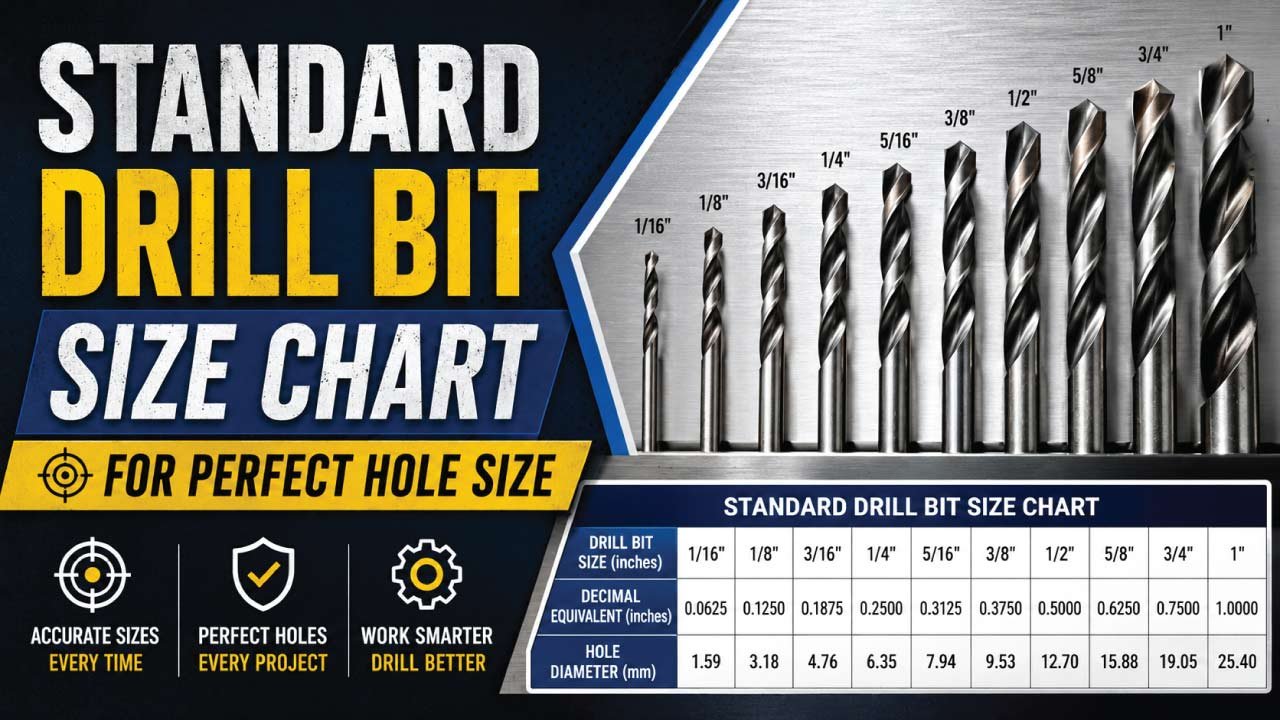
Getting the perfect hole size is one of the most important skills in drilling work—whether you’re doing woodworking, metal fabrication, plumbing, or DIY home repairs. A small mistake in drill bit size can lead to loose fittings, broken screws, poor threading, or wasted material.
This guide gives you a standard drill bit size chart that you can use for everyday work, plus a simple explanation of how to choose the right size for perfect accuracy every time.
What Is a Drill Bit Size Chart?
A drill bit size chart is a helpful reference guide that displays standard drill bit diameters and their equivalent measurements in different sizing systems. It allows users to quickly choose the correct drill bit for drilling accurate holes in wood, metal, plastic, concrete, and other materials during mechanical, construction, or DIY projects.
- Inches
- Millimeters
- Common applications
It helps you match the correct drill bit with screws, bolts, anchors, and tap sizes for accurate fitting.
Why Correct Drill Bit Size Matters
Choosing the correct drill bit size is extremely important for safe, accurate, and professional drilling results. The proper size helps create clean holes, improves fastening strength, and prevents unnecessary damage to materials or tools. Whether working on wood, metal, concrete, or plastic, correct sizing ensures better performance and long-lasting installations.
- ✔ Proper screw grip
- ✔ Accurate hole diameter
- ✔ Strong mechanical fitting
- ✔ No material damage
- ✔ Long-lasting installation
Wrong Size Consequences
Using the wrong drill bit size can create several problems during drilling and installation. Incorrect hole sizing may weaken the connection, damage the material, or make screws and bolts fit improperly. These issues often lead to unstable assemblies, reduced durability, and wasted time during repair or construction work.
- ❌ Too small hole → material cracks or bit gets stuck
- ❌ Too large hole → weak grip and loose fittings
- ❌ Incorrect depth → poor installation strength
Standard Drill Bit Size Chart (Imperial & Metric)
Here is a universal chart used in woodworking, metalwork, and construction.
| Inch Size | mm Size | Common Use |
|---|---|---|
| 1/64 | 0.4 mm | Precision electronics |
| 1/32 | 0.8 mm | Small pilot holes |
| 1/16 | 1.6 mm | Light wood drilling |
| 3/32 | 2.4 mm | Small screws |
| 1/8 | 3.2 mm | General drilling |
| 5/32 | 4.0 mm | Anchor & screw pilot holes |
| 3/16 | 4.8 mm | Masonry anchors |
| 7/32 | 5.6 mm | Medium bolts |
| 1/4 | 6.4 mm | Heavy screws & anchors |
| 5/16 | 7.9 mm | Structural bolts |
| 3/8 | 9.5 mm | Large fasteners |
| 1/2 | 12.7 mm | Heavy-duty fixing |
| 5/8 | 15.9 mm | Industrial use |
| 3/4 | 19.0 mm | Structural drilling |
| 1 inch | 25.4 mm | Large pipe holes |
Metric Drill Bit Size Chart (Common Engineering Sizes)
| mm Size | Inch Equivalent | Use |
|---|---|---|
| 1 mm | 0.039 in | Precision electronics |
| 2 mm | 0.079 in | Small fasteners |
| 3 mm | 0.118 in | Light assembly |
| 4 mm | 0.157 in | Screws and anchors |
| 5 mm | 0.197 in | General hardware |
| 6 mm | 0.236 in | Medium bolts |
| 8 mm | 0.315 in | Heavy screws |
| 10 mm | 0.394 in | Structural bolts |
| 12 mm | 0.472 in | Large fittings |
| 14 mm | 0.551 in | Industrial use |
| 16 mm | 0.630 in | Heavy-duty work |
| 20 mm | 0.787 in | Pipe fittings |
How to Choose the Right Drill Bit Size
Choosing the correct drill bit size is important for creating accurate holes, preventing material damage, and ensuring strong fastener holding power. The right bit size depends on the material type, fastener style, and the fit required for the application. Following a proper selection process improves drilling accuracy and overall project quality.
Step 1: Identify the Material
Different materials require different drill bit types and drilling approaches. Softer materials usually drill easily, while harder surfaces need stronger and heat-resistant drill bits. Selecting the correct bit for the material improves cutting performance, reduces wear, and prevents cracking or overheating during drilling operations.
- Wood → standard bits
- Metal → HSS or cobalt bits
- Concrete → masonry bits
Step 2: Identify the Fastener
The type of fastener directly affects the required drill hole size. Screws often need pilot holes, bolts usually require clearance holes, and taps require precise hole sizing for thread cutting. Correct fastener identification helps ensure proper grip strength, alignment, and secure installation in mechanical or construction work.
- Screw
- Bolt
- Anchor
- Tap
Step 3: Match Drill Size Using Chart
After identifying the material and fastener, use a drill bit size chart to select the correct hole diameter. Size charts provide accurate recommendations for pilot holes, clearance holes, and tapping operations. Using a chart minimizes guesswork and helps avoid loose fittings, stripped threads, or broken drill bits.
Always check recommended clearance or pilot hole size.
Step 4: Adjust for Application
Some applications require tighter or looser fits depending on the purpose of the connection. Slight drill size adjustments can improve holding strength, assembly ease, or movement tolerance. Professionals often fine-tune drill sizes based on material thickness, load conditions, and the precision required for the final installation.
- Tight fit → slightly smaller bit
- Loose fit → slightly larger bit
Also Read:
Simple Drill Bit Selection Rule
Professionals often follow simple drilling rules to quickly choose the correct bit size during workshop or field work. These guidelines improve drilling efficiency and reduce installation problems. Understanding these practical rules makes drill bit selection easier for beginners and helps achieve cleaner, more accurate results consistently.
👉 For screws → drill slightly smaller than screw diameter
👉 For bolts → drill equal or slightly larger
👉 For tapping → drill smaller (to allow thread cutting)
Drill Bit Size for Common Applications
Choosing the correct drill bit size is important for creating accurate holes, improving fastener grip, and preventing material damage. Different applications require different hole sizes depending on the screw, bolt, anchor, or threading process being used. Proper drill sizing also improves safety, strength, and overall installation quality.
🛠️ Wood Screws
For wood screws, the drill bit size is usually about 70–90% of the screw diameter depending on the wood type. Softer woods may require smaller pilot holes, while hardwoods often need slightly larger holes. Correct sizing helps prevent wood splitting and ensures the screw threads grip firmly and securely.
🛠️ Metal Bolts
When drilling holes for metal bolts, the drill bit size is generally equal to the bolt diameter. This creates a clearance hole that allows the bolt to pass through smoothly without excessive force. Proper hole sizing also improves alignment and reduces stress on the surrounding metal material.
🛠️ Wall Anchors
Wall anchors require a drill bit size that closely matches the anchor diameter for proper holding strength. If the hole is too large, the anchor may become loose and fail to support weight correctly. A properly sized hole ensures the anchor expands securely inside the wall material.
🛠️ Tap Threads
For tapping threads, the drill bit size is calculated using the tap diameter minus the thread pitch. This creates enough material for the tap to cut strong threads while still allowing smooth operation. Using the correct tap drill size helps prevent broken taps and weak thread formation.
Ddrill=Dtap−PD_{drill}=D_{tap}-P
Also Read:
Common Mistakes in Drill Sizing
Choosing the correct drill size is extremely important for achieving accurate holes, strong fastening, and professional-quality results. Many drilling problems occur because of simple sizing mistakes that reduce precision, weaken joints, or damage materials. Understanding these common mistakes helps improve drilling accuracy, tool performance, and overall project safety.
❌ Guessing Drill Size
Many people estimate drill bit sizes without checking a proper chart or measurement guide. This often leads to inaccurate holes, loose fittings, poor thread engagement, and weak mechanical joints. Using the correct drill size improves precision, safety, and overall assembly performance in woodworking, metalworking, and construction projects.
❌ Using Worn Drill Bits
Old or worn drill bits lose their cutting sharpness over time, causing oversized, rough, and uneven holes. Dull bits also generate excessive heat and increase drilling effort. Regularly inspecting and replacing damaged drill bits helps maintain drilling accuracy, cleaner finishes, and better fastening results during machining or repair work.
❌ Ignoring Material Type
Different materials require specific drill bit types and drilling techniques for the best results. Using the wrong bit on wood, metal, plastic, or concrete can damage both the tool and the material surface. Always match the drill bit material and design according to the workpiece for efficient and accurate drilling.
❌ Not Checking Depth
Incorrect drilling depth is a common mistake that affects fastening strength and overall stability. Holes that are too shallow may prevent screws, anchors, or bolts from fitting properly, reducing holding power. Measuring drilling depth carefully ensures secure fastening, proper alignment, and long-lasting performance in mechanical assemblies.
Pro Tips for Perfect Hole Size
Achieving the perfect hole size is essential for accurate fitting, strong fastening, and professional-quality drilling results. Proper drilling techniques improve precision, reduce material damage, and extend tool life. Following a few simple drilling tips can help create cleaner holes, improve safety, and ensure better performance in woodworking, metalworking, and construction tasks.
✔ Always Measure Twice
Before starting any drilling operation, carefully verify all measurements and hole size requirements. Double-checking dimensions helps prevent costly mistakes, material waste, and improper fittings. Accurate measurements are especially important when working with bolts, anchors, screws, or precision mechanical components that require exact hole alignment.
✔ Use Sharp Drill Bits
Sharp drill bits cut materials more efficiently and produce cleaner, smoother, and more accurate holes. Dull bits increase friction, create rough edges, and may cause overheating or oversized holes. Regularly inspecting and replacing worn drill bits improves drilling performance, reduces effort, and extends both tool and material lifespan.
✔ Start With Pilot Holes
Creating a small pilot hole before drilling the final size improves accuracy and helps guide the larger drill bit properly. Pilot holes reduce wandering, minimize material cracking, and make drilling easier in wood, metal, and plastic. This technique is especially useful for precision drilling and fastening applications.
✔ Use Proper Drill Speed
Different materials require different drilling speeds for safe and effective results. High drilling speeds work best for wood, medium speeds are suitable for metal, while low speeds combined with hammer action are ideal for concrete and masonry. Proper speed selection reduces heat buildup and improves hole quality.
✔ Keep Drill Straight
Maintaining a straight drilling angle is important for creating accurate and evenly sized holes. Tilting the drill can produce angled, oversized, or misaligned holes that weaken fastening strength. Holding the drill steady and perpendicular to the surface improves precision, stability, and overall drilling performance.
Also Read:
Drill Bit Material Guide
Different drill bit materials are designed for different drilling applications and material types. Choosing the correct drill bit material improves cutting performance, extends tool life, and prevents overheating or breakage. Understanding these common drill bit materials helps beginners and professionals select the right tool for wood, metal, concrete, and industrial projects.
1. High-Speed Steel (HSS)
High-Speed Steel drill bits are among the most commonly used bits for everyday drilling tasks. They are affordable, durable, and suitable for general-purpose work. HSS bits perform well on softer materials and are widely used in home workshops, garages, and light mechanical applications.
- General purpose
- Wood and light metal
2. Cobalt Bits
Cobalt drill bits are specially designed for drilling through hard and tough metals. They can withstand high heat and maintain sharpness longer than standard HSS bits. These bits are commonly used in automotive, fabrication, and industrial environments where stronger cutting performance is required.
- Hard metals
- Stainless steel
3. Carbide Bits
Carbide drill bits are extremely hard and durable, making them ideal for heavy-duty drilling applications. They are mainly used for concrete, brick, stone, and masonry surfaces where standard drill bits wear out quickly. Professionals often use carbide bits in construction and industrial drilling operations.
- Concrete and masonry
- Industrial use
Final Thoughts
A standard drill bit size chart is one of the most valuable reference tools for both beginners and professionals. It helps ensure accurate drilling, proper fastening, and cleaner results across different materials and applications. Using the correct drill bit size improves efficiency, prevents mistakes, and makes every workshop project safer and more professional.
- ✔ Strong fittings
- ✔ Clean holes
- ✔ Long-lasting results
- ✔ Zero material damage
Key Takeaway
Understanding drill sizing removes guesswork from drilling tasks and helps create more accurate, secure, and reliable installations. By following proper sizing charts and recommendations, users can avoid weak fittings, damaged materials, and wasted effort while improving overall work quality and project durability.
- 👉 Always match drill bit size with application
- 👉 Never rely on guesswork
- 👉 Use charts or formulas for accuracy
Once you understand drill sizing, every project becomes faster, cleaner, and more professional.
Also Read:
FAQ:
What is a drill bit size chart used for?
A drill bit size chart is used as a reference guide to select the correct drill bit for different materials and fasteners. It ensures accurate hole sizing in wood, metal, plastic, and concrete. By following the chart, users avoid errors like loose fittings, broken screws, or weak joints, improving overall drilling precision and efficiency.
Why is correct drill bit size important in drilling work?
Correct drill bit size is important because it ensures strong fastening, clean holes, and proper alignment of screws or bolts. It prevents material damage such as cracking or splitting and improves installation strength. Using the right size also reduces rework, saves time, and guarantees safer, more professional results in woodworking and construction projects.
What happens if I use the wrong drill bit size?
Using the wrong drill bit size can lead to serious issues like loose fittings, weak joints, or damaged materials. A smaller bit may cause cracking or tool jamming, while a larger bit creates poor grip. These mistakes reduce durability, increase repair work, and negatively affect the overall quality of the project.
How do I choose the right drill bit size?
To choose the right drill bit size, first identify the material and fastener type. Then refer to a drill bit size chart for accurate measurement. Use slightly smaller bits for screws, matching sizes for bolts, and smaller bits for tapping. This ensures proper fit, strong grip, and clean, professional drilling results every time.
What is the difference between pilot holes and clearance holes?
A pilot hole is a small guide hole that helps prevent cracking and ensures accurate screw placement. A clearance hole is larger and allows bolts or screws to pass through freely without gripping. Pilot holes improve control and strength, while clearance holes are used for smooth assembly without resistance or thread engagement.
Which drill bit is best for wood, metal, and concrete?
High-speed steel (HSS) bits are best for wood and light metal due to their versatility. Cobalt bits are ideal for hard metals like stainless steel because they resist heat. Carbide bits are best for concrete and masonry, offering strong cutting ability and long-lasting performance in tough drilling conditions.
Why do drill bits become dull or wear out?
Drill bits become dull due to continuous friction, high heat, and improper use on hard materials. Over time, cutting edges lose sharpness, causing rough or oversized holes. Lack of lubrication and wrong drilling speed also contribute. Regular maintenance, correct speed, and proper bit selection help extend drill bit life significantly.
What is the best rule for selecting drill bit size?
A simple rule is: for screws, choose a slightly smaller drill bit than the screw diameter; for bolts, use the same or slightly larger size; and for tapping, use a smaller bit to allow threading. This rule ensures accurate fitting, strong grip, and professional-quality drilling results in all applications.